
How to choose the right activated carbon for air purification?
Release time:
26-02-03
Source:
When choosing the right activated carbon for air purification, three key points should be considered: its adsorption capacity, its suitability for home use, and its ability to maintain a stable and long-term effect.
First, look at the core indicators: Don’t be fooled by the “multiple holes”; look at the data.
Activated charcoal isn’t necessarily better the darker it is, nor is it always more cost-effective the cheaper it is. The real determinants of its effectiveness are these key indicators:
1.Iodine value ≥ 800 mg/g is required for household use.
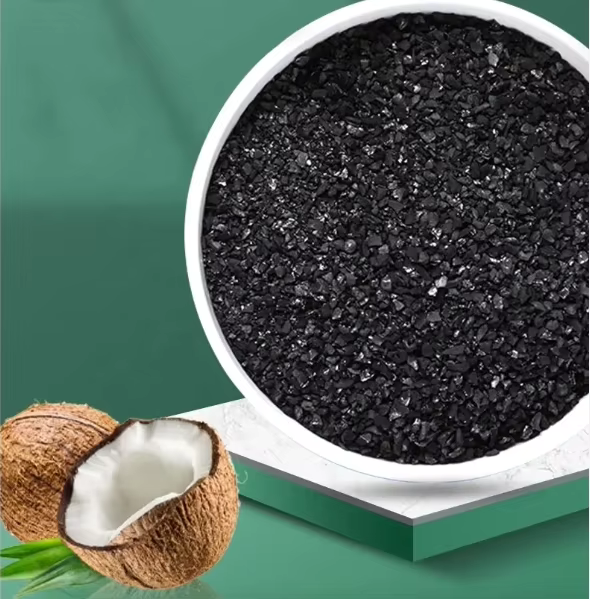
The iodine value reflects the adsorption capacity for small molecule pollutants (such as formaldehyde and benzene). Activated carbon with an iodine value below 800 has weak adsorption capacity and may simply be dyed carbon masquerading as genuine. The Ministry of Ecology and Environment explicitly recommends that when using activated carbon adsorption technology, products with an iodine value of no less than 800 mg/g should be selected. High-quality coconut shell activated carbon on the market can have an iodine value of over 900, making it an ideal choice.
2.Carbon tetrachloride adsorption rate ≥ 60%
This indicator measures the total pore volume, which is “how much pollutant it can hold.” The higher the value, the more abundant the internal space of the activated carbon, and the greater its adsorption capacity.
3.Specific surface area > 1000㎡/g
A larger specific surface area means more “rooms” available for adsorption. High-quality activated carbon generally has a specific surface area between 1000 and 1300 m²/g, with micropores accounting for over 95%, making it the primary adsorbent.
Tip: When purchasing, be sure to check if the product has a test report that indicates key parameters such as iodine value and carbon tetrachloride adsorption rate.
Second, consider the material and form: different raw materials result in vastly different effects.
| Material Type | Characteristics | Recommended or Not |
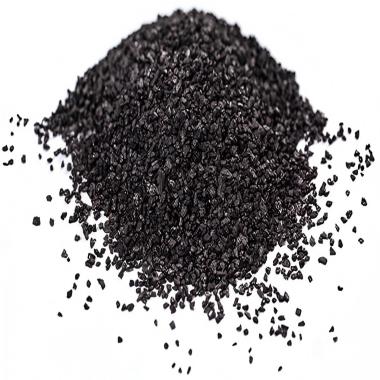
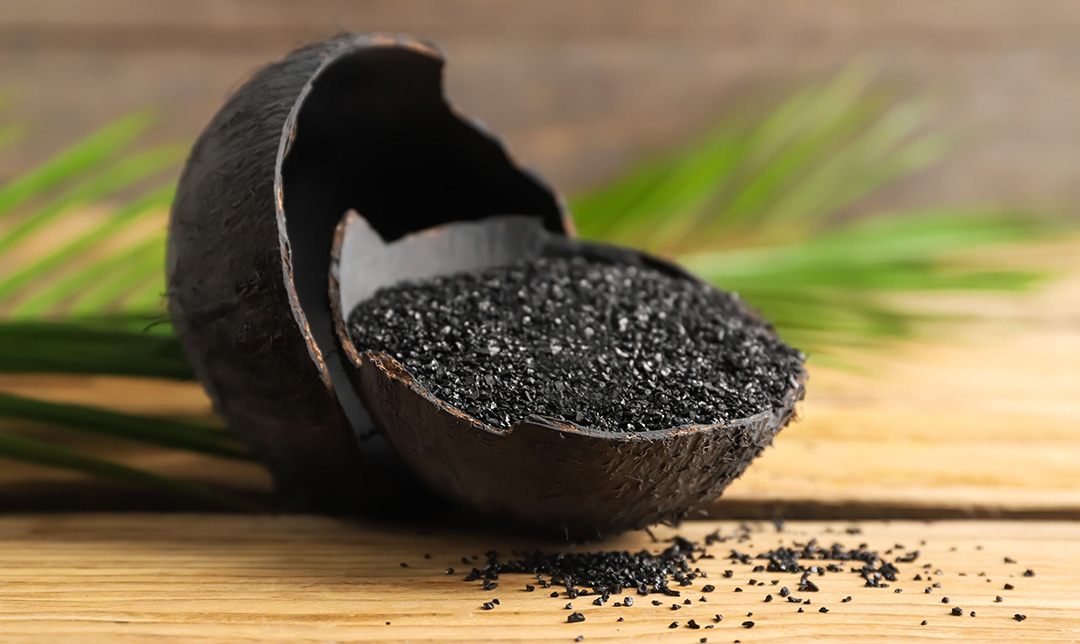
| Coconut Shell Activated Carbon | Dense pores, high adsorption efficiency, low ash content, no heavy metal residues; suitable for gas purification, especially for household formaldehyde and TVOC removal | ✅ Highly recommended |
| Wooden Activated Carbon | Slightly larger pore size, suitable for liquid treatment (e.g., water treatment); slightly inferior to coconut shell carbon for air purification | ⚠️ Usable but not the first choice |
| Coal-based Activated Carbon | Low cost, commonly used in industry, but may contain impurities such as sulfur and heavy metals; long-term use carries risks of secondary pollution | ❌ Not recommended for household use |
| Bamboo Charcoal | Weak adsorption capacity, more suitable for humidity regulation and mildew prevention, not suitable for air purification | ❌ Use with caution |
📌 Form selection:
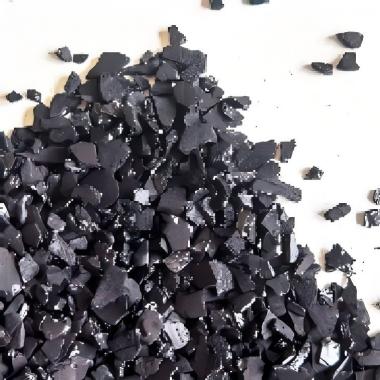
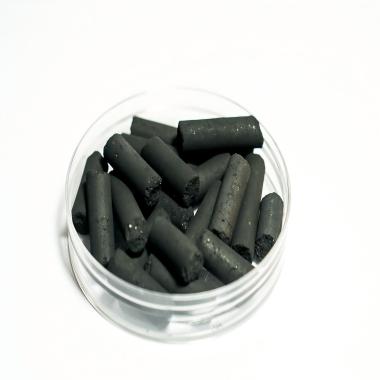
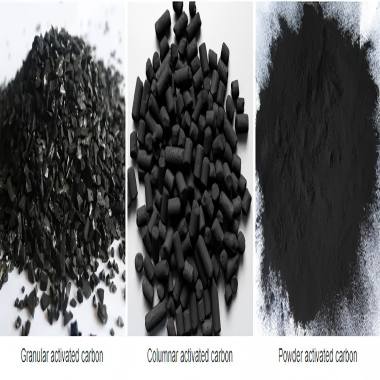
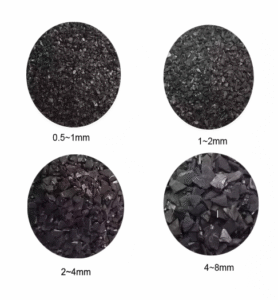
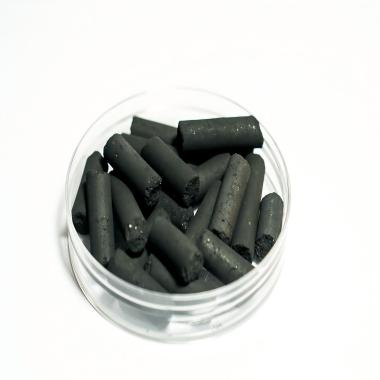
- Granular/columnar charcoal: easy to fill, but prone to creating dead zones in airflow.
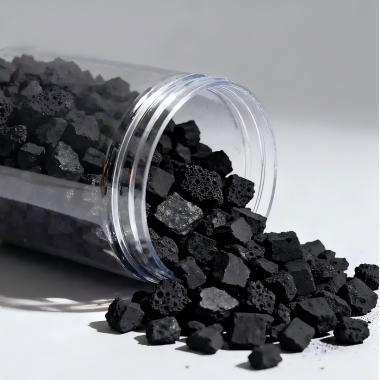
- Honeycomb carbon panels: Low wind resistance, large contact area, and purification efficiency improved by more than 30%, making them more suitable for use in air purifiers. Note: Due to manufacturing limitations, the iodine value of honeycomb carbon is generally below 600mg/g, but this can be compensated for by increasing the amount used.
III. Matching Usage Scenarios: Don’t Treat Industrial Carbon as a Household Treasure
- New car odor removal: Choose coconut shell granular activated carbon with an iodine value of 600-900. Its mesoporous structure is specifically designed to eliminate formaldehyde and TVOC.
- For newly renovated homes: Prioritize the use of high-iodine-value coconut shell activated carbon or composite purifying activated carbon (such as Weiqi nano-mineral crystal activated carbon), with a measured formaldehyde decomposition efficiency of up to 99.6%.
- Kitchen fumes and odors: Coal-based macroporous charcoal is more suitable for absorbing volatile oils, but it needs to be stored in a sealed container to avoid polluting the air.
- Air purifier filling: It is recommended to use honeycomb carbon plates or granular carbon wrapped in non-woven fabric to avoid carbon powder leakage and damage to the motor.
🔍 Verification tip: Put activated carbon into water. If fine bubbles are continuously produced for a long time, it indicates that the pores are well-developed and the adsorption capacity is good.
IV. Tips to Avoid: These “money-saving tricks” can actually harm your health.
1. Don’t believe “reuse after sun exposure” claims. Sun exposure under household conditions cannot completely remove formaldehyde; in fact, it may cause already adsorbed pollutants to be released again, becoming a “pollution source.” The correct approach is to replace it every 3-6 months.
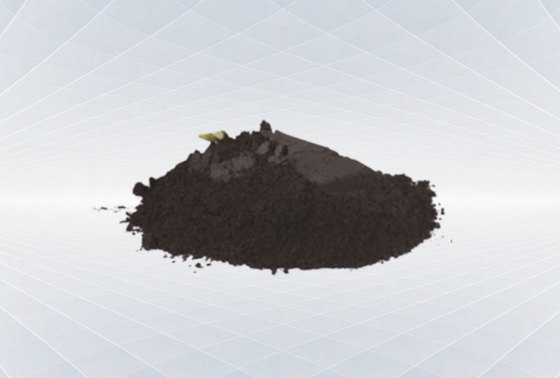
2. Avoid loose activated carbon powder. Activated carbon powder is easily airborne, posing a health risk to the lungs when inhaled, and can also easily clog the air purifier’s fan.
3. Avoid cheap, low-quality activated carbon. Some products use insufficiently activated or dyed activated carbon, which is not only ineffective but may also release harmful substances.
4. Pay attention to sealed packaging. Activated carbon will prematurely adsorb pollutants in the air and become ineffective; always choose vacuum or aluminum foil sealed packaging.
CTC
Related News
06-13
2025

Shop 101, No. 202 Huanshi West Road, Yuexiu District, Guangzhou City,Guangdong Province, China
Telephone: 86 13670786666
Mobile: 86 13670786666
E-mail:wuguifang57@gmail.com