
From Water Purification to Gas Masks: Unveiling the Versatile Applications of Activated Carbon
Release time:
26-03-17
Source:
From Water Purification to Gas Masks: Unveiling the “Universal” Adsorptive Power of Activated Carbon
In our lives, there exists a substance—pitch-black and unassuming in appearance—yet it appears in every critical corner, from household water filter pitchers to battlefield gas masks. It is none other than activated carbon—hailed as the “universal adsorbent.”
I. A Miniature Forest: One Gram of Charcoal, Three Sports Fields
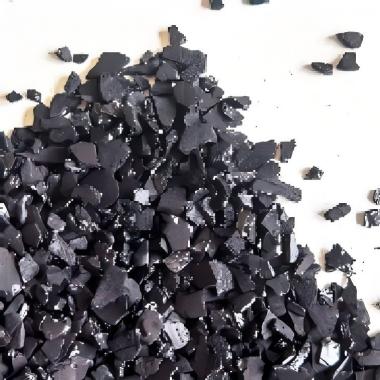
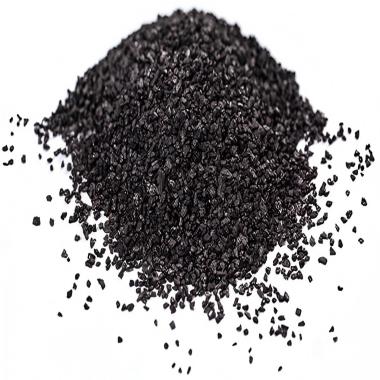
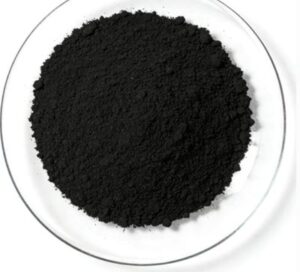
The secret behind activated carbon’s power lies entirely within its “belly.” Through a high-temperature activation process, the interiors of materials such as wood, coal, or coconut shells are “hollowed out,” forming countless microscopic pores invisible to the naked eye.
Astonishing Data: The internal specific surface area of just one gram of activated carbon can reach between 500 and 1,500 square meters. This means that a tiny granule of activated carbon—pinched between your fingertips—could, if unrolled, have an internal surface area equivalent to three standard-sized football fields.
II. Water Purification: The “Gatekeeper” Behind the Clarity
When you open up a home water purifier, the most critical component is typically the activated carbon filter cartridge.
1.Residual Chlorine Neutralizer: The lingering chlorine odor left over from tap water disinfection is effortlessly captured by activated carbon.
2.Decolorization and Deodorization: Acting like a precision magnet, it adsorbs organic pollutants and odor-causing molecules present in the water.
3.Industrial Guardian: In wastewater treatment plants, it serves as the final line of defense, ensuring that discharged water is free from harmful heavy metals.
III. The Shield of Breath: The Soul of the Gas Mask
If purified water represents its gentle side, then in a gas mask, activated carbon reveals its strength.
1.Physical Barrier: In the context of chemical protection, activated carbon filter canisters are capable of instantly trapping toxic vapors present in the air.
2.Chemical Catalysis: Modern military-grade activated carbon typically undergoes chemical impregnation; it not only “adsorbs” toxic gases but also “decomposes” them, thereby securing precious breathing time for survival in extreme environments.
IV. Immersing Oneself in Life: From the Refrigerator to the Operating Room
The applications of activated carbon extend far beyond this; it is virtually ubiquitous:
1.Home Odor Removal: Place in refrigerators, shoe cabinets, or newly renovated rooms to capture odors and formaldehyde molecules.
2.Medical Emergencies: In cases of oral poisoning, doctors frequently administer an “activated charcoal suspension” for gastric lavage, utilizing its powerful adsorption capabilities to prevent toxins from entering the bloodstream.
3.Food Industry: The white sugar you consume appears so pure and translucent because, during the production process, activated charcoal adsorbs impurities and pigments present in the sugar syrup.
V. The Extraordinary Within the Ordinary
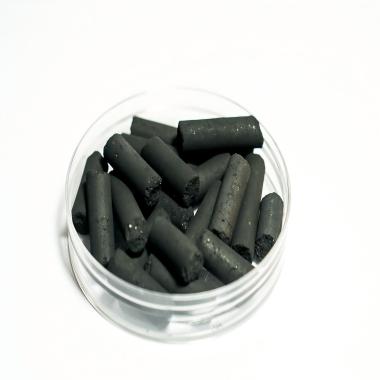
Although activated carbon may appear to be nothing more than a pile of charcoal fragments, it leverages its extraordinary “absorptive capacity” to filter out hazards and purify the world in places unseen. The next time you take a sip of sweet, filtered water—or don a carbon-filtered mask on a smoggy day—remember to give thanks to these black “microporous giants.”
The Activated Carbon Family: Who Is the True “King of Adsorption”?
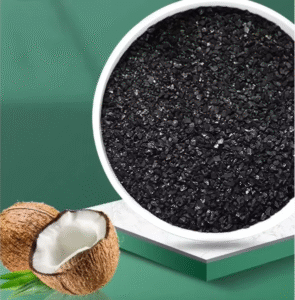
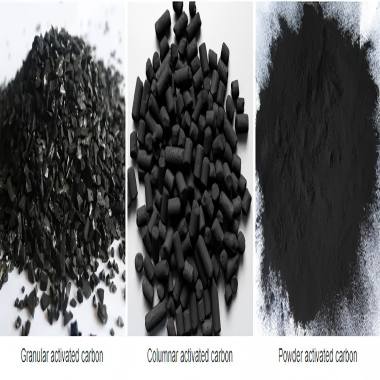
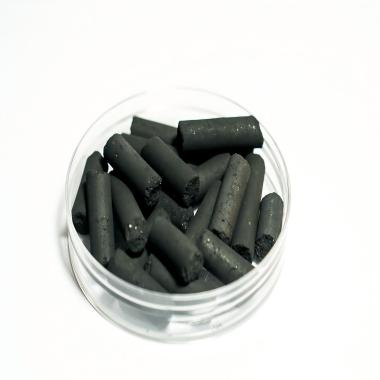
The performance of activated carbon depends largely on its raw materials. Different raw materials determine the size of its internal pores—whether micropores, mesopores, or macropores—which directly influences the types of impurities it is able to “capture.”
1. Coconut Shell Activated Carbon: The “Top Performer” in Fine Purification
a.Raw Materials: High-quality coconut shells from Southeast Asia.
b.Key Features: Extremely fine pore structure (highly developed microporosity), high mechanical strength, resistance to breakage, and exceptionally low impurity levels.
c.Areas of Expertise:
- High-End Water Purification: Precisely captures residual chlorine, odors, and trace organic substances in tap water.
- Gold Extraction: Used in the mining industry to adsorb gold from cyanide solutions.
- Electronic-Grade Ultrapure Water: Meets the water requirements of high-tech and precision industries, such as semiconductor manufacturing.
2. Wood-based Activated Carbon: The “Harvester” of Large Molecules
a.Raw Materials: Sawdust, fruit shells, or charcoal.
b.Characteristics: Relatively large pore size (well-developed mesopores and macropores), low density, and lightweight.
c.Areas of Expertise:
- Food Decolorization: A vital asset in the sugar, beverage, and alcohol industries, capable of adsorbing large pigment molecules from liquids.
- Pharmaceutical Industry: Used for the removal of impurities from and the purification of medicinal liquids.
3. Coal-based Activated Carbon: An “Industrial Mainstay” Offering Exceptional Value for Money
a.Raw Materials: High-quality anthracite, lignite, etc.
b.Key Features: Widest pore size distribution (ranging from small to large), exceptionally high mechanical strength, and highly competitive cost.
c.Areas of Expertise:
- Industrial Waste Gas Treatment: Such as flue gas desulfurization and denitrification in factories, and chemical recovery.
- Large-scale Wastewater Treatment: Primary or secondary filtration of municipal sewage and industrial wastewater.
CTC
Previous
From Water Purification to Gas Masks: Unveiling the Versatile Applications of Activated CarbonRelated News
06-13
2025

Shop 101, No. 202 Huanshi West Road, Yuexiu District, Guangzhou City,Guangdong Province, China
Telephone: 86 13670786666
Mobile: 86 13670786666
E-mail:wuguifang57@gmail.com